LOCAL AND ESSEX HISTORY: Wednesday 24 September 2025;
Visit to Billericay - Town Trail and Cater Museum
Although very close to home, our recent visit to Billericay showed that there is always a lot more to find out about a place even when you think you know it well!
The History of Billericay dates back to the Bronze and Iron Ages with burial mounds still to be seen in Norsey Woods. However, the town was born at the time of the Roman invasion in 55/54BC. Roman burials were found near Billericay School plus coins dating back to AD69. For centuries Billericay was part of the hamlet of Great Burstead (Burgestede) and part of Earl Godwin’s estates (father of King Harold).
The name Byllyrica is first recorded in 1291 but the name changed several times. In the 13th and 14thcenturies, pilgrims travelling to Canterbury would stay overnight in a tavern, to try to stay safe from the Highwaymen on the “Pilgrim’s Path” enroute to Tilbury where they would cross the Thames. A chantry chapel was built in 1342 to support a priest.
Billericay men joined with Wat Tyler in the Peasants Revolt against the taxation of King Richard. On 28th June 1381, the rebels pursued by the Kings Armies, fled to Norsey Wood, where after an infamous bloody battle, over 500 hundred rebels were killed.
Thomas Watts, a linen draper of Billericay and a follower of the Wycliffe preachers, was burnt at the stake on 5th April 1555, after refusing to change his views.
During the reign of King Henry VIII, Billericay became a strong centre of Puritanism in Essex. Continuous religious persecution led some residents to set off on the famous Mayflower voyage from Plymouth to the New World in 1620. Christopher Martin, the leader of the expeditioner and chief provisioner, lived in the town.
Billericay became a parish in 1860 and the coming of the railway increased its importance. Many houses were built in the Georgian period. St Andrews Hospital was built on the site of the Victorian work house (later the Burns Unit and now flats). There are currently 59 listed buildings of architectural and historical interest.
Our visit
Firstly, the town car park has a limit of 4 hours so we planned to walk the trail, have lunch, then visit the Cater museum (open Tuesday and Wednesday 1-4pm)
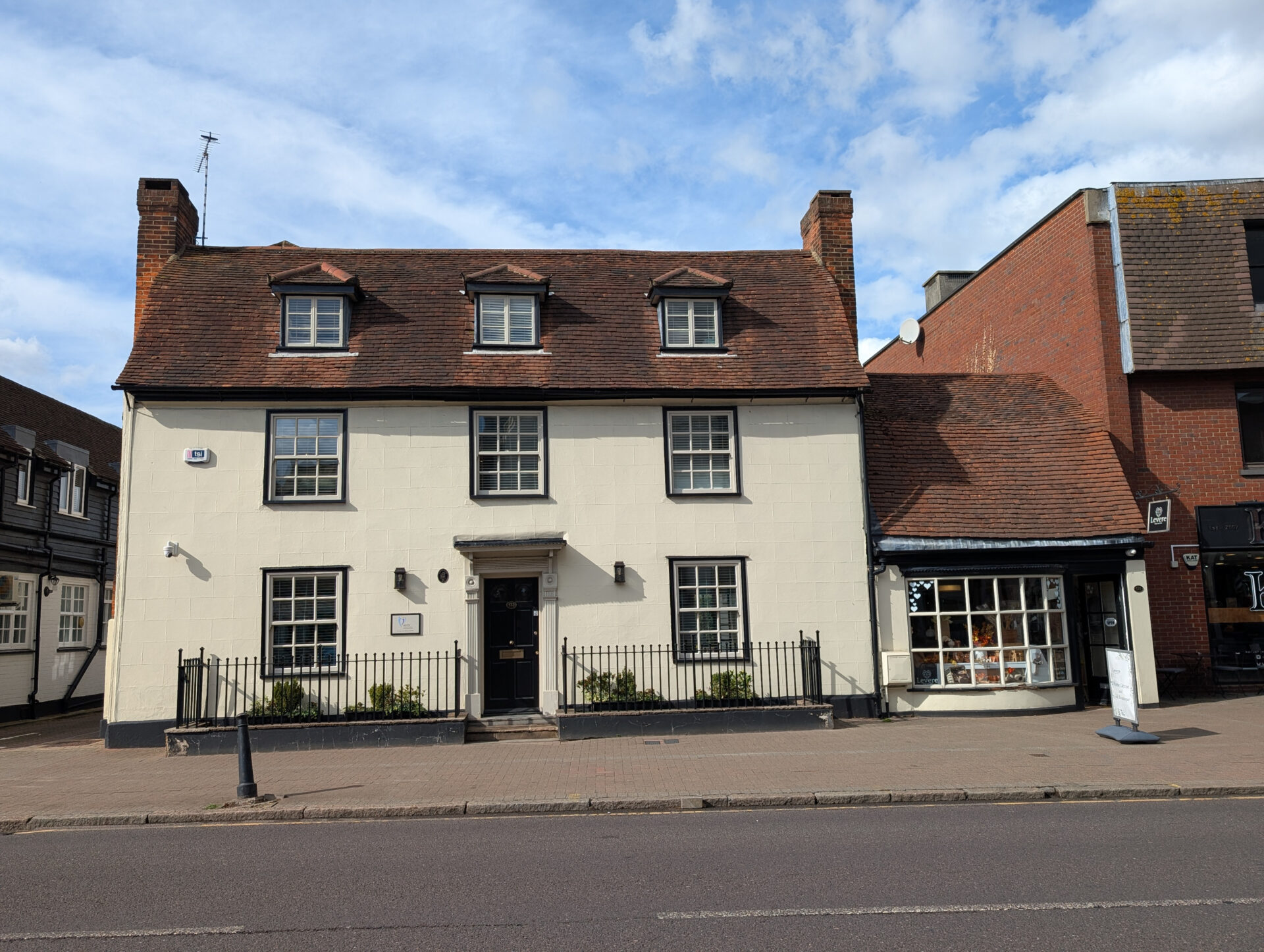
Sadly, although there is a Town Trail we found it quite difficult to find detailed information. With what information we did have, we set off to walk the High Street and follow the trail. Burghstead Lodge, an 18th century red brick building is now the Register of Births and Deaths. 108 High Street is mid17th century and has an arched entrance to the rear courtyard suggesting it was once a coaching Inn. The Red Lion is thought to be a 15th century house called the Lion and shown on a map of 1593. Many buildings do have the Town Trail Plaque and we identified those that we could.
Following the suggestion of one group member we crossed the road and walked through Waitrose to the back of its carpark where there is an old burial ground, now a Garden of Peace, linked to the Billericay Congregational Church 1692-1838 and the United Reformed church. From here we continued along Chapel Street, admiring one of the oldest buildings in the town (built about 1450 and maybe the home of a wealthy wool merchant) at 3 Chapel Street on the way. At its junction with the High Street stands the Cenotaph remembering those lost on both wars.
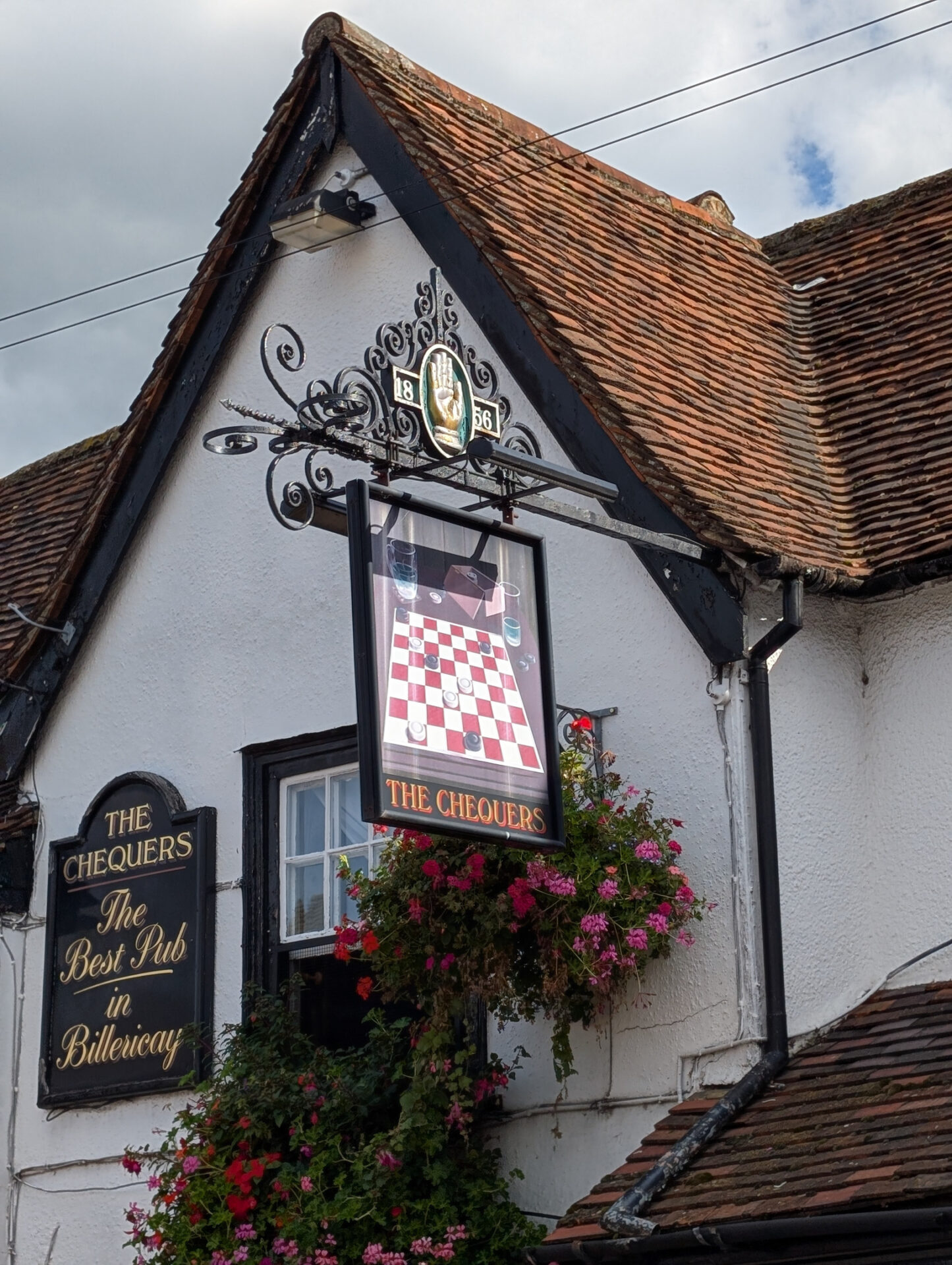
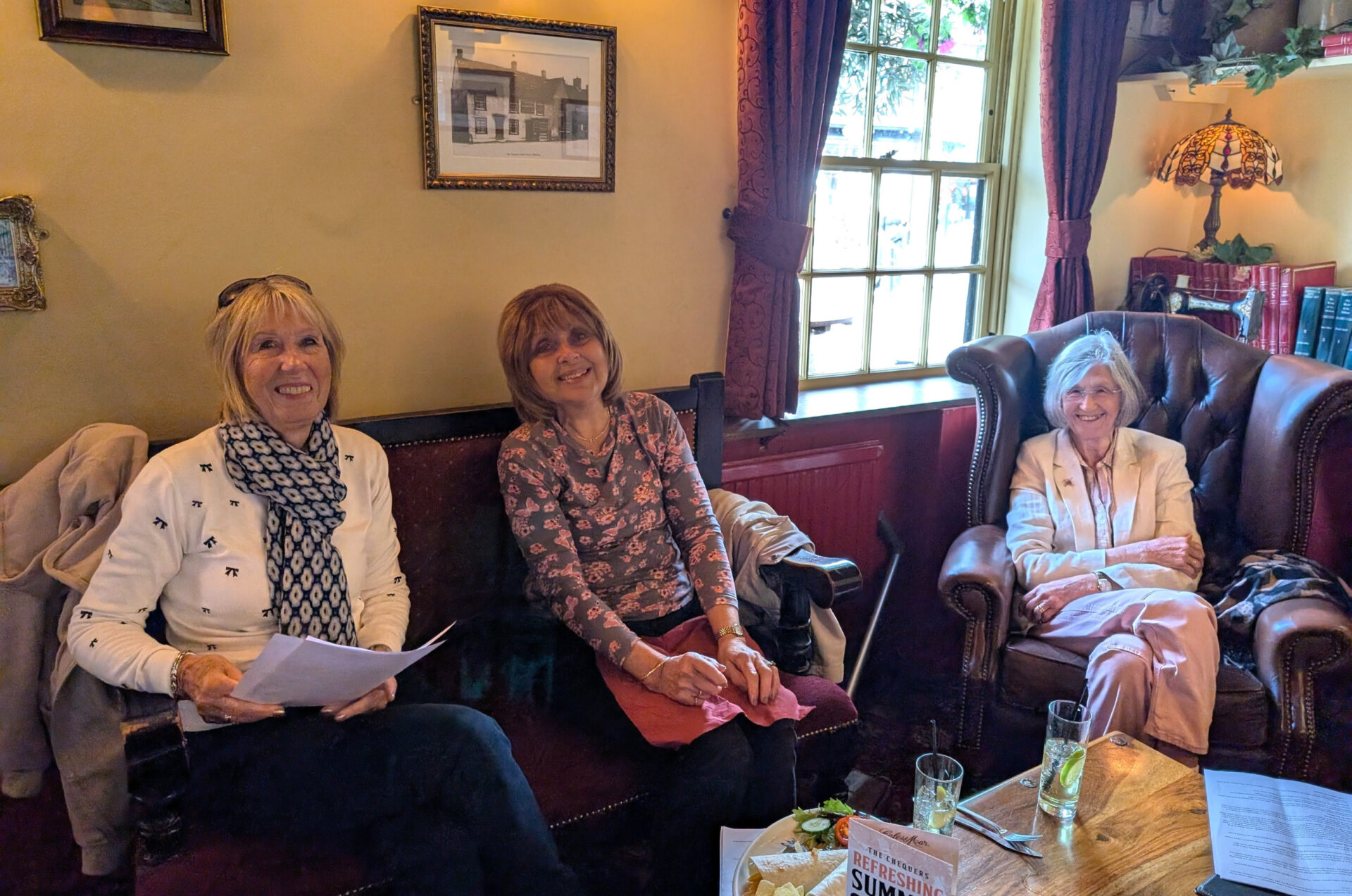
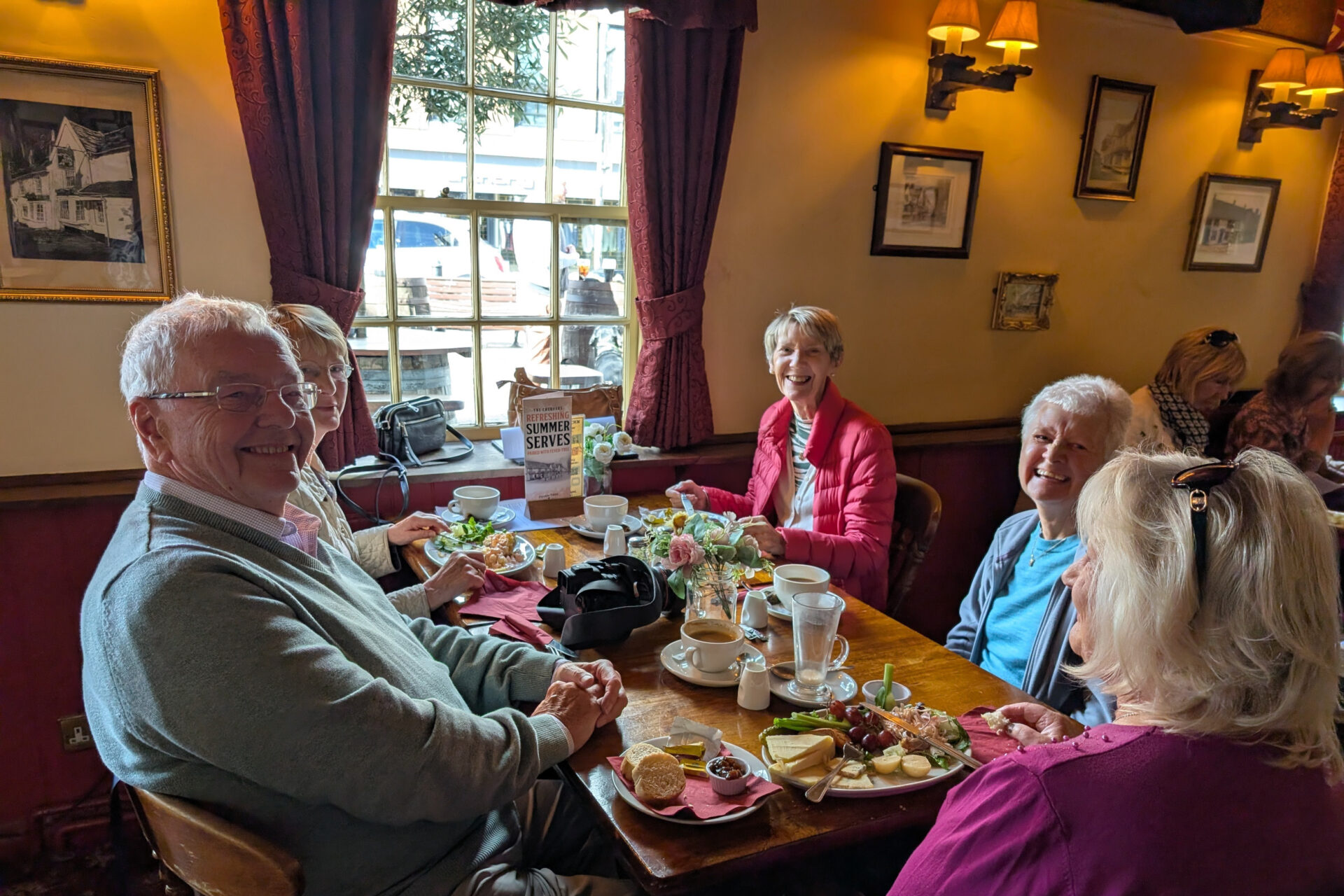
As we were then beside The Chequers Inn (originally built in 16th Century) we decided to stop for an excellent sandwich lunch. Inside there are many low ceilings with beams of different heights and many nooks and crannies. Old paintings and photos of the pub adorn the walls.
As we left, we admired the timber framed Chantry from the 16th century. Christopher Martin is said to have lived there before provisioning the Mayflower.
From here we continued back along to 74 High Street to visit The Cater Museum. This was established by Alice May Cater, in honour of her late husband William Alexander Cater, a local antiquarian, and opened in May 1960. The museum is full of fascinating facts and artefacts. With rooms and furniture from the Edwardian era, Saxon finds, Roman coins and pottery, and items from shops and businesses no longer around, there is plenty to look at and learn about!
However, the most well-known item is “The two headed lamb” which was born on a local farm. It is over 120 years old but was fully restored in 2019 by Norwich Museums service and looks as good as new.
There is also a Victorian garden to the rear of the museum. Opened 2002, with Victorian plants and herbs along with a number of interesting artefacts.
By this time, we needed to head back to the car park before our time ran out. Another very interesting, informative and enjoyable visit.
Marion Coleman
Click top half of any photo for full size and quality. Scroll using < > symbols. Swipe left/right on touch screens.